

Five wellbeing challenges employers will need to tackle in 2026

Cannabis use, weight-loss-jab muscle issues and soaring neurodiversity cases are just some of the wellbeing challenges employers will face in 2026.

New research and the Keep Britain Working review have highlighted the need for fundamental change when it comes to preventing employees from getting too sick to work.

From early intervention and preventative checks to practical strategies for managing neurodiversity and personal stress, the coming year will demand a proactive approach.

At the same time, new challenges, ranging from increased cannabis use to weight-loss-jab musculoskeletal (MSK) issues will need to be addressed. Our chief medical officer explores the challenges ahead and actionable steps employers can take.

1. Increasing drug use

Use of ketamine – a clinical anaesthetic also used in specialist treatment for severe depression – is rising sharply across the UK. Although it is illegal to possess or supply, due to its potential for harm and dependence, recreational use has reached record levels.

Our Health at Work research shows that one in seven employees has increased their use of substances to cope with worries. This suggests that ketamine’s ability to offer a sense of detachment from emotional discomfort may contribute to its growing appeal in 2026.

At the same time, the increasing ease with which employees can have cannabis legally prescribed, for issues ranging from anxiety to back pain, has brought into question the extent to which it is being used for recreational purposes rather than genuine medical need.

Companies dismissing people for failed drug tests have seen tribunal action brought against them, meaning a key priority for the year ahead is ensuring robust drug policies and testing procedures are in place, to protect both employees and the business from increasing drug use.

2. Weight-loss-jab related MSK issues

The long-term side effects of weight-loss drugs have yet to fully emerge, but as the Lancet recently reported, the newer class of weight loss drugs can produce substantial muscle loss: 25-39% over 36-72 weeks.

A recent study of Semaglutide (a common GLP-1 weight loss drug) also found that up to 40% of weight loss could be muscle, with other studies showing rapid weight loss can lead to decreases in bone density and muscle, increasing the risk of MSK issues.

With MSK issues already a leading cause of sickness absence and lost working days, it’s vital that employers educate employees who are taking weight-loss drugs about the importance of combining medication with strength training and adequate nutrition.

The benefits of preserving and building muscle is also important for other employees at increased risk of MSK issues due to homeworking, lifestyle factors and an aging workforce in general. Encourage employees to stay active and put healthy amounts of stress on their bodies, whether through going to a gym, physical hobbies or the use of weights.

3. New focus on prevention

The much-anticipated Keep Britain Working Report highlighted the need for fundamental change when it comes to reducing the thousands of people now being signed off as too sick to work every day in the UK.

As well as emphasising the extent to which ‘good work’ can protect health and prevent ill-health from arising, the review also argues that prevention, retention, early intervention and rapid rehabilitation ‘in the workplace’ is likely to be more effective than only treating illness once it appears.

At present, it’s typically only employers with people in safety critical roles that offer voluntary health assessments, to allow employees to learn about and correct any health issues, before they fail a medical.

However, the new focus on prevention is expected to increase the number of employers offering preventative checks, such as mini-mental health assessments and wellness checks, as part of their existing occupational health programmes.

4. Increasing neurodiversity cases amid funding cuts

More recognition and acceptance of neurodiversity means the number of people coming forward for help with conditions such as autism, ADHD and dyslexia is surging. At the same time, Access to Work reforms are anticipated to reducing funding.

With the National Autistic Society estimating that over 227,000 people in England are waiting for an autism assessment alone, it’s important to bear in mind that someone doesn’t need an official diagnosis to be supported, when a needs assessment can identify the specific challenges impacting on their performance.

For example, not everyone needs tens of thousands of pounds worth of assistive technology, when existing text-to-speech software and simple changes to the employee’s working conditions, and how they’re managed, can often be all that’s needed for them to thrive.

A major trend for 2026 will therefore be employers avoiding unnecessary delays and looking at what they themselves can do to support and accommodate a diverse workforce, with simple but effective reasonable adjustments.

5. Tackling underlying causes of mental health issues

Preventing ever-increasing mental health issues, by tackling the underlying causes of these is set to be one of the biggest challenges for 2026. This requires addressing the most stigmatised wellbeing issue in the workplace: relationship issues.

Relationship issues ranging from marital difficulties to sibling estrangement to anxiety about children refusing school or teens losing their way, are a major contributor toward poor mental health and the third biggest reason for someone to reach out to one of our counsellors.

Although the resulting emotional support, on how they can help themselves through a difficult time, is beneficial, employers also have a role to play. Many employees feel like they must hide the personal challenges they are facing, causing them to also experience the added strain of wearing their ‘I’m fine’ mask every day.

By normalising relationship struggles and creating a safe space for employees to ask for help, employers can help people realise they’re not alone and signpost into support. Giving some flexibility and temporarily easing workplace pressures can also allow employees to handle practical challenges and prevent overwhelm, to reduce the risk of the employee going absent.

Dr Bernard Yew is Chief Medical Officer (CMO) for PAM Group

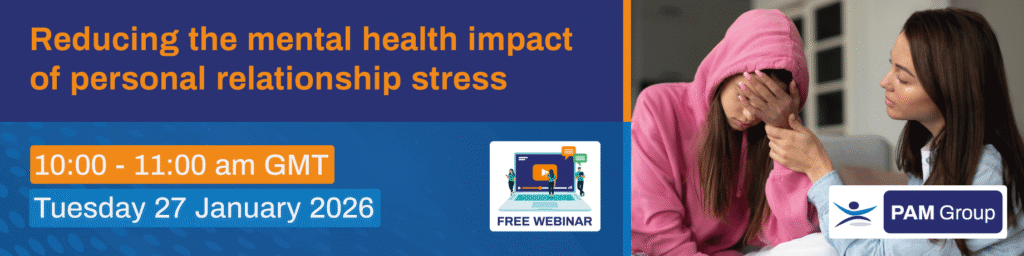
Free Webinar: Reducing the Mental Health Impact of Personal Relationship Stress

10:00am – 11:00am, Tues 27 January 2026

Join our clinical team for new data insights into how personal relationships are affecting employee mental health. Find out why relationship stress – including divorce, family estrangement and parental stress – is one of the most prevalent yet stigmatised wellbeing issues. You’ll also gain practical guidance on how to reduce the impact on your workforce

How can PAM Group help?

Our multi-disciplinary team can support the wellbeing of your workforce with the above issues in the following ways:

  • Dedicated neurodiversity support – to carry out needs assessments and support managers on helping neurodiverse individuals to thrive
  • Drug and alcohol support – including help to create policies, carry out drug and alcohol testing and help those impacted overcome addiction
  • Workplace physiotherapy – to reduce the risk of employees developing musculoskeletal issues and help them recover when they do

For more information, please contact us to let us know a good time for one of our consultants to call you back to discuss your organisations particular needs.

Related Insights

SUBSCRIBE

Occupational health insights on keeping your people healthy and productive

Want to have our latest research, case studies and opinions
delivered straight to your inbox?

About us
Scroll to Top